
Medical Aid for Palestinians
Transforming digital engagement in a time of crisis
Crises can drive extraordinary public support, but they also create a challenge: how do you keep people engaged once the news cycle moves on? We worked closely with MAP to answer that question and deliver a strategy for strong, prolonged digital engagement.
UX research
Content and engagement
Digital Strategy

The brief
The war in Gaza created a devastating and prolonged humanitarian crisis. Throughout, Medical Aid for Palestinians (MAP)has continued providing emergency medical care and supporting hospitals under extreme pressure.
As public awareness and support surged, MAP’s income grew from £34,705,000 to £56,552,000 in a year.
We partnered with them at this pivotal point to strengthen their digital strategy, using engagement data from before and during the escalation to shape a focused plan for scalable, sustained impact.
The challenge
We had begun talking to Medical Aid for Palestinians (MAP) before war broke out in Gaza, when they were looking at how to sustain engagement and income outside periods of emergency.
They already knew that most supporters preferred to donate and communicate online, and wanted a channel strategy with clear goals, informed by a better understanding of the content and messaging that would help them deliver.
War broke out just as the work was getting under way. Obviously this put the MAP team under huge stress, but by working closely together we were able to use the moment to gather key insight into how supporters and patterns of engagement change during a crisis.
We hypothesised that supporters who arrived during a crisis might be quite distinct from those who support MAP during quieter times: more likely to give in response to humanitarian emergencies, and therefore more vulnerable to being drawn elsewhere when another major global event occurred.
By contrast, we thought longer-term supporters might have a more personal connection to the cause, and a different level of understanding of the wider context.
We believed that if we could understand the motivations behind different donor segments, we could strengthen and extend the engagement journey, and in turn build support at this vital time.
Our approach
We structured our approach to identify the differences between those who engaged after the start of the war and those who had been engaging before it.
Engagement audit
User research
Organisational insight
Strategy sprint
Donation and campaign UX review
The results
The research validated our original hypothesis and showed clear audience segments, which we could map by giving behaviour and long-term value to the organisation.
We were then able to turn those insights into evidence-based personas, showing the needs, opportunities and content triggers most relevant to each audience. From that, we produced a set of recommendations to improve engagement with different audiences across MAP’s website, email and social channels.
The work culminated in a cross-organisational content calendar, complete with practical examples of how to reach the right audience, on the right channel, at the right time. That gives MAP a stronger foundation for sustaining support and continuing to deliver essential services in Gaza, whatever the global news cycle brings.
What the client said
“Working with We Are MC² gave us the clarity and structure around digital engagement that we needed at an exceptionally challenging time. By working closely together in a rapidly changing situation, we were able to uncover valuable insight into how supporter behaviour shifts during times of crisis.
“Understanding the different motivations, needs and giving patterns of those who engaged during the emergency, compared with longer-term supporters, has helped us strengthen engagement across our channels, and build a stronger foundation for sustaining support for our work in Gaza beyond periods of heightened public attention.”
Max Slaughter, Head of Communications, Medical Aid for Palestinians
Other Case Studies
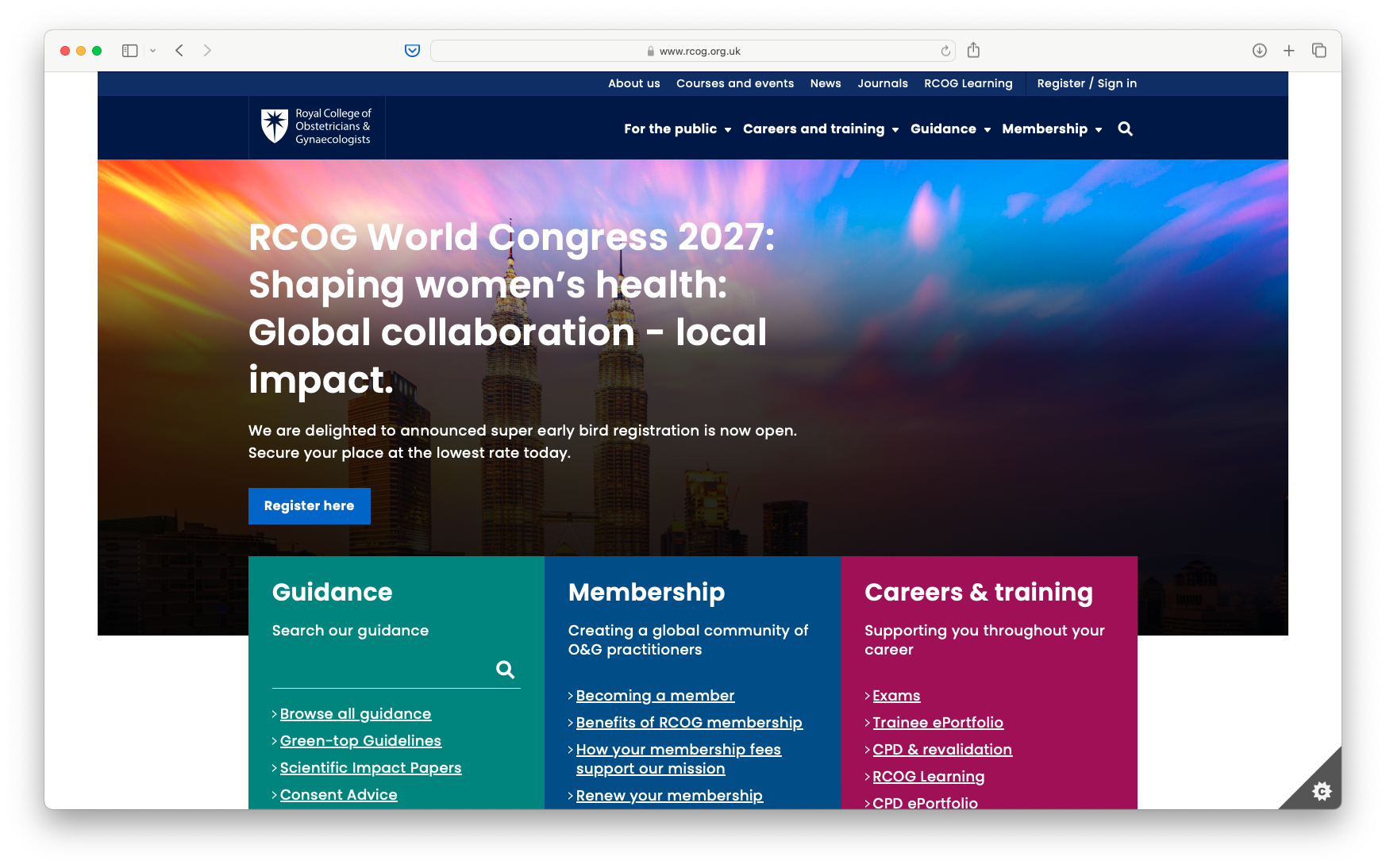
Royal College of Obstetricians & Gynaecologists
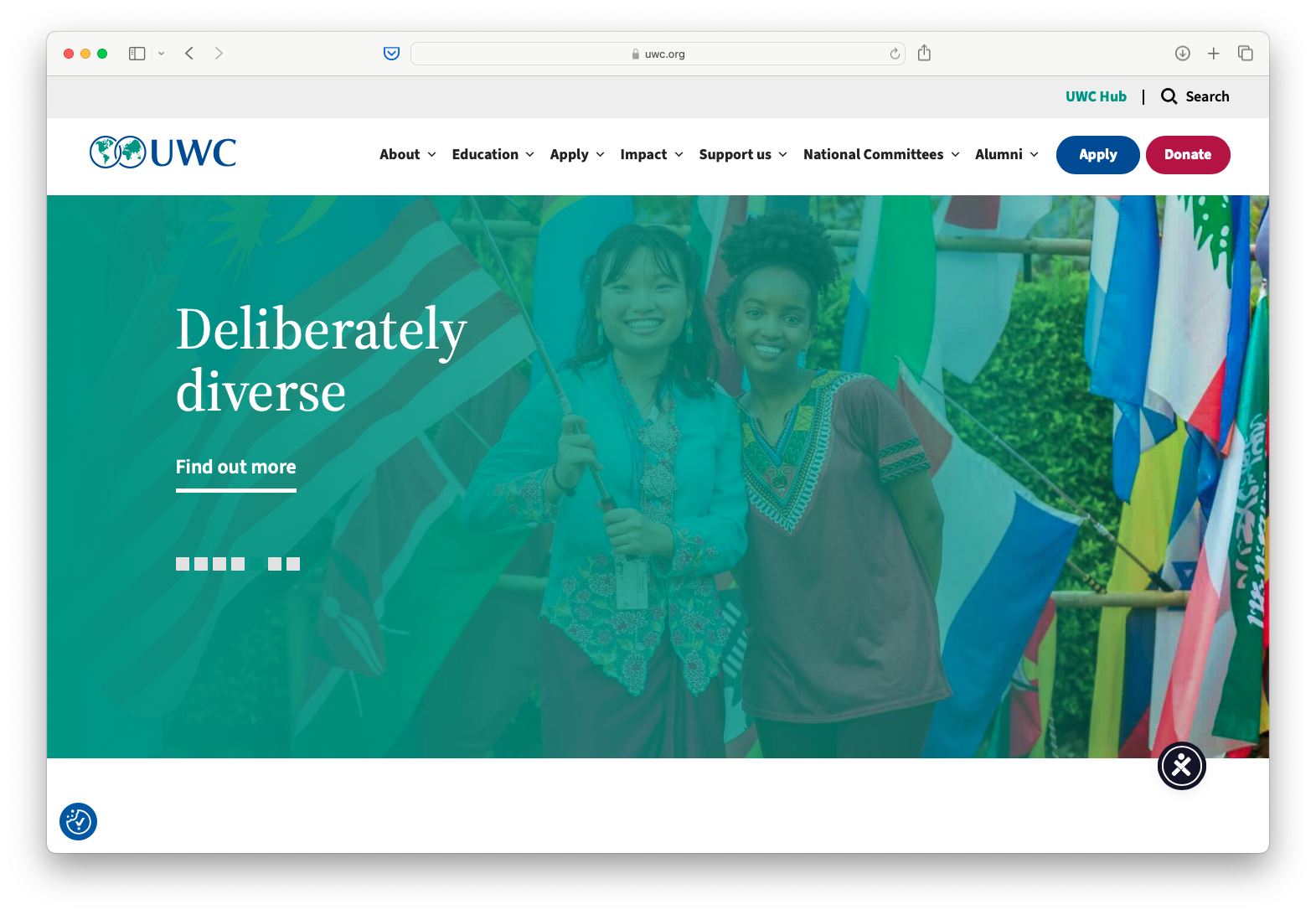
United World Colleges
